
Check DeKalb County's Owner-of-Record Card
The first source for a present owner is DeKalb Revenue AssuranceWeb. Search the address, pick the matching result, and save the tax year, PIN, account, and parcel number along with the owner label.
| Owner | Name carried for the selected tax year |
|---|---|
| Mailing Address | Destination for property mail, not proof of residence |
| Situs Address | Physical property address |
| PIN / Account | Stable cross-system keys |
| Deed Reference | Book and page clue for Probate research |
| Tax District | Jurisdiction carried by Revenue |
One Rainsville card sent owner mail to a Henagar post office box. The situs stayed in Rainsville. That split is normal and proves neither occupancy nor a city boundary. Each card is also tied to a chosen tax year. A PIN 14287, account 96179 record shows why. A current-owner check should save several identifiers, not just a name. Those keys let you test the same DeKalb County parcel. It should appear in Revenue, GIS, and Probate. They also prevent name mix-ups. The parcel number, not the label, is the thread.
Match the DeKalb Current Owner in GIS
The DeKalb parcel viewer shows current and future layers. Compare PIN or PPIN, parcel number, owner, subdivision, section-township-range, and deed book and page there. Its approximate geometry is not a survey.
- Owner of record
- The party on the selected assessment roll.
- Situs
- The property's physical address.
- Recording lag
- The time before a transfer appears across county systems.
The GIS owner label is a cross-check, not an independent title source. If its name conflicts with Revenue, note the selected layer and date, then let the deed index decide whether a transfer was recorded more recently.
Note: Future parcel and billing-year labels can appear before they describe a completed present-year event.
Inspect DeKalb's Current Parcel Card
The sample AssuranceWeb parcel summary shows which fields matter.
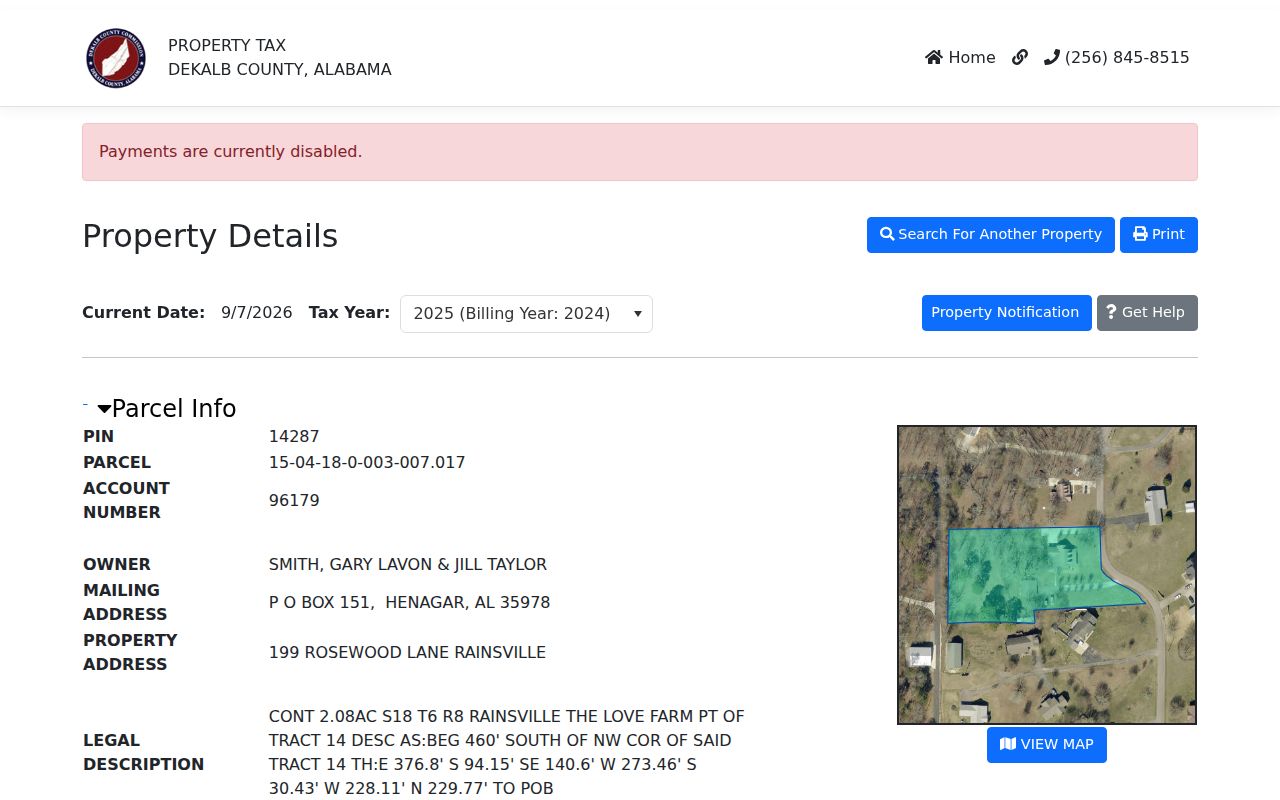
The DeKalb owner label sits beside parcel, address, tax, building, and value material. Read them as one picture. The right name then stays with the right parcel.
Verify DeKalb County's Current Owner Against the Deed
A recorded transfer can be newer than the assessment roll. Search the Probate deed index and match its newest relevant entry to the parcel and legal description.
- Read the owner and year on AssuranceWeb.
- Match the parcel in current GIS.
- Find the newest plausible grantee entry in Probate.
- Inspect the image or request a certified deed when formal proof is needed.
On a Probate result, check the recorded date, party roles, instrument number, book and page, and any legal-description clue. The newest filing with the name is not always a conveyance. Mortgages, releases, liens, plats, and miscellaneous filings do other jobs. Save the document type with the date. Only then treat the grantee as the current owner.
- Grantee
- The party receiving the recorded interest.
- Recorded date
- When the instrument entered the public record.
- Certified copy
- An authenticated office-issued copy.
Allow for DeKalb County Update Timing
Each system keeps its own clock. Probate records an instrument. Revenue updates its roll. GIS refreshes on a separate schedule, and AssuranceWeb can even carry future tax-year rows. When a recent closing creates a conflict, compare dates and let the newest recorded deed settle the transfer.
A careful note records four dates: execution, recording, assessment year, and billing year. A deed may be signed before it is recorded. The owner field can linger on an annual assessment after recording, so collapsing all four into one date hides the very lag a current-owner inquiry exists to resolve.
Recent-sale gap. The assessment card may lag. A newer deed should not be rejected merely because the owner field has not refreshed.
Read DeKalb Company and Estate Labels Carefully
Copy trust, estate, life-estate, and company wording exactly. The Alabama entity search adds company context but never replaces the vesting deed. Court orders and probate files can explain a label that a deed-name search cannot.
For an entity, search the exact punctuation-free core name. Compare its entity number, status, registered office, and filing history. A registered agent is not automatically the property owner. For an estate or life estate, keep the fiduciary terms. Review the operative deed or court order. Do not shorten the owner label to one person's name.
Separate DeKalb Situs From Owner Mail
A situs address identifies the assessed land. The mailing address tells Revenue where notices go. They differ when an owner uses a post office box, holds several parcels, or receives mail outside the municipality. The Rainsville card with its Henagar mailing address is one concrete DeKalb County example.
Never assume the owner lives at either address. Match the situs, PIN, subdivision, deed reference, and tax district instead. That keeps a current-owner check anchored to the legal parcel. It also keeps assessment data from becoming an unsupported claim about a person's home.
Resolve a DeKalb Owner-Field Conflict
Rank the records by what each is built to establish. Probate supplies the recorded transfer evidence. Revenue supplies the owner carried on a dated assessment roll, while GIS supplies mapped parcel context and repeats selected tax fields. None of these records deserves to be silently overwritten by another.
| Conflict | Best next check | What to retain |
|---|---|---|
| Old name on tax card | Newest relevant Probate deed | Recorded date and grantee |
| Two similar parcels | PIN, legal description, GIS shape | All parcel identifiers |
| Trust or estate wording | Deed or court instrument | Full vesting label |
| City-name mismatch | Situs, tax district, current boundary source | Source and observation date |
Use DeKalb Current-Owner Records Lawfully
A mailing address on the tax roll can support a purchase, estate, deed, or boundary question. But it never proves where someone lives. Treat the owner-of-record entry as a starting point, not a conclusion. Assessment questions belong to the Revenue Commissioner. Recorded and certified deeds belong to the Judge of Probate. So route deed-record requests there when authenticity matters.
The Probate recording office sits inside the DeKalb County Courthouse at 300 Grand Avenue SW, Suite 100, Fort Payne. Hours are Monday through Friday, 8:00 a.m. to 4:00 p.m. The Revenue Commissioner is listed at 206 Grand Avenue SW, Suite 101. Visiting either counter makes sense whenever an online property search returns something unclear, a deed image will not load, or a certified copy is required for closing.
Lawful use. Use current-owner records for legitimate property research. Never use a public name or mailing address to stalk, harass, or harm anyone.